CK44 USDT Deposit Guide 2026 | Crypto Payments Explained
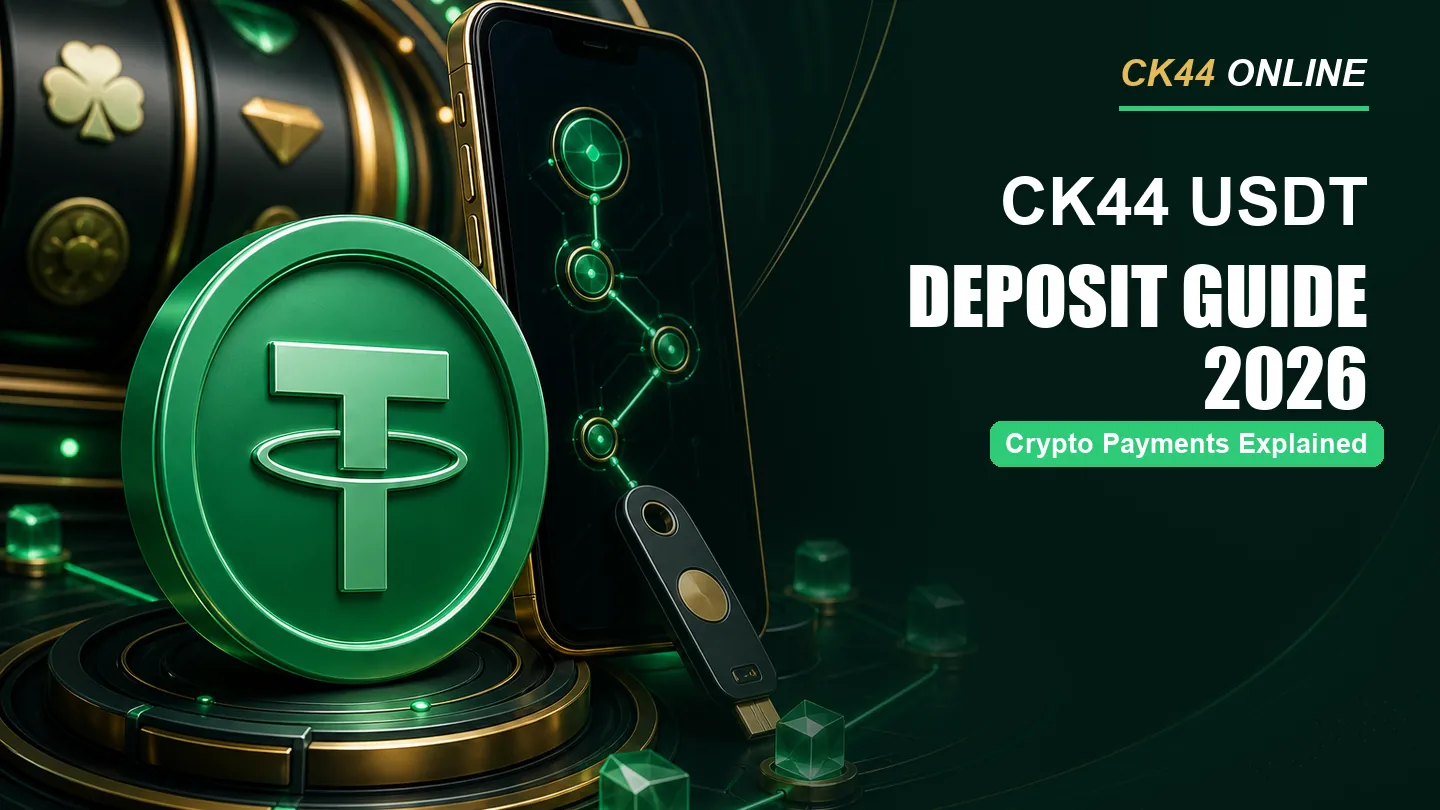
Among the payment options that surface on some CK44 routes, USDT sits a little apart from everything else in the cashier. Tether, the stablecoin pinned close to one US dollar, gives more experienced players a way to move money from an existing crypto wallet or an exchange balance rather than a local bank or mobile app. That makes it fast and flexible in the right hands, and genuinely unforgiving in the wrong ones, which is exactly why it rewards a slower, more careful read before you send a single coin. CK44 Online is an independent information hub about the platform, not the operator, so treat the figures and steps below as reported and typical rather than fixed. They vary by account and by route, and the version that matters is always the one shown inside your own active session.
What USDT actually is and why some players use it
USDT is short for Tether, a cryptocurrency designed to hold a value close to one US dollar. Unlike Bitcoin or other coins that swing sharply in price, a stablecoin aims to stay roughly steady, which is why it has become one of the most widely moved assets in the world. For a player, that stability is the appeal. A balance sent as USDT is meant to be worth about the same when it arrives as it was when it left, so there is far less of the price-drop worry that puts people off volatile crypto.
The other draw is reach. If you already hold Tether in a personal wallet or on an exchange, you can move it directly without touching a bank account or a mobile-money app. For someone who lives comfortably in that world, it can feel quicker and more private than the local rails. But none of that changes the basic truth that crypto behaves differently from a mobile wallet, and the habits that keep you safe are different too. This is an advanced option, and it reads best as one.
Where USDT fits among the payment options
On CK44, USDT may appear in the cashier alongside the familiar mobile wallets, though it is aimed at a much narrower group. If you already hold Tether and are comfortable managing addresses, networks and confirmations, it can be a clean way to top up. If crypto is unfamiliar territory, it is genuinely not the place to learn on the fly, because the usual safety nets that come with a card or a local wallet simply are not there behind a blockchain transfer.
Availability also shifts from person to person. Crypto support can differ by account and by route, so USDT will not show for every user, and the supported networks and minimums you see may not match what another player sees. Whatever appears inside your active route is the version that applies to you. If it is absent, there is no workaround worth the risk, and no reason to chase details from anywhere other than the cashier itself.
The one step that matters most: choosing the right network
The single most important decision in a USDT deposit is the network. Tether does not live on just one chain; it can travel across several, and the two you will hear about most often are TRC20 and ERC20. These are not interchangeable. The platform tells you which network to use, and you must send on exactly that network, to exactly the address shown, for the deposit to arrive. Match both and the transfer works as intended. Get either wrong and the funds can vanish for good.
This is the part that catches people out, so it is worth stating plainly. Crypto transfers are irreversible by design. There is no chargeback, no support desk that can claw a confirmed transaction back, and no second chance if USDT lands on the wrong chain or on an address with a single mistyped character. Sending TRC20 funds to an address meant for ERC20, or the reverse, can lose the money permanently with nobody able to recover it. That is not a scare story; it is simply how the technology works, and it is why crypto suits careful people and punishes hasty ones.
The safest habit here is also the simplest. Copy the deposit address and the network straight from the active CK44 interface. Never type either by hand, never rely on an old address you saved from a previous session, and never accept payment details from a stranger in a chat, a group or a private message. Genuine details live inside the platform, not in your inbox.
How the deposit actually flows
Once the network is settled, the sequence itself is short. You choose USDT in the payment menu, and the platform displays a deposit address together with a network name. You then open your own wallet or exchange, select USDT on that same network, paste the copied address, and send the amount. After that, you wait, because the balance does not move the instant you hit send.
Blockchain transfers need confirmations before they count as final. Depending on the network and how busy it is at the time, that can take anywhere from a couple of minutes to longer, and only once the transfer has enough confirmations does the credit reach your account. Watching for the balance to appear rather than assuming it has is part of the process, not a sign that anything is wrong. If it is taking longer than you expected, the answer is usually patience and a check of the transaction on the network, not a second send. Sending twice because the first attempt seemed slow is one of the more expensive mistakes a hurried player can make.
Planning around network fees
Fees are the other thing to watch, and they behave differently from the flat costs you might know from a card or a local wallet. Each network charges its own fee to process a transfer, and those costs rise and fall with how congested the chain is. TRC20 transfers are typically cheaper and are often why players lean toward that network when it is offered, while ERC20 fees can climb noticeably when the Ethereum network is busy.
Because of this, the amount that actually arrives can differ slightly from the round figure you pictured in your head. It is worth accounting for the fee before you send rather than being surprised afterward, and worth sizing your deposit so a small deduction does not push you under a minimum. A moment of arithmetic in advance saves confusion later. And whatever the fee looks like, take one final look at the address and the network before you confirm. Double-checking both, every single time, is the discipline that separates smooth crypto deposits from costly ones.
Why a local wallet is simpler for most people
For most players in Bangladesh, honestly, USDT is not the obvious pick, and that is fine to admit. A local mobile wallet is simpler, more forgiving of small errors, and far easier to sort out if something looks off, because there is a familiar service and a recognisable process behind it. That is why our bKash deposit guide 2026 and the Nagad deposit and withdrawal walkthrough remain the routes most people reach for. They fit everyday phones, everyday balances and everyday habits, and they carry none of the wrong-network risk that defines a crypto transfer.
USDT earns its place only when you already live comfortably in crypto and want to skip the local rails entirely. If that is not you, there is no shame in staying with the mobile wallets, and no advantage to be gained by forcing a method you are not sure of.
How withdrawals and other routes compare
It also helps to think past the deposit to how you will take winnings out, since that is where method choice really shows. Getting money back to a local wallet tends to be the more straightforward path for players here, and our bKash withdrawal guide walks through what that typically looks like, timings and checks included. Beyond bKash and Nagad, other familiar rails may appear on some accounts too, and our overview of Rocket and Upay payments covers how those compare for people who prefer them.
The pattern across all of them is the same. Security habits carry from start to finish: work only inside the official cashier, copy details rather than typing them, ignore anyone offering to “help” with a transfer, and keep your own wallet or exchange login protected. Whether you move USDT or a local balance, careful beats fast every time.
Whichever method you use, remember that no deposit or withdrawal route guarantees any outcome, and the exact figures vary by account and by route. Confirm the live details inside the CK44 cashier before you move a single coin. This is money you can afford to play with, and only that: 18+, play responsibly.